AI-Powered Road Infrastructure Monitoring System
Computer vision system mounted on waste trucks for automated city-wide road defect detection, enabling proactive infrastructure maintenance.
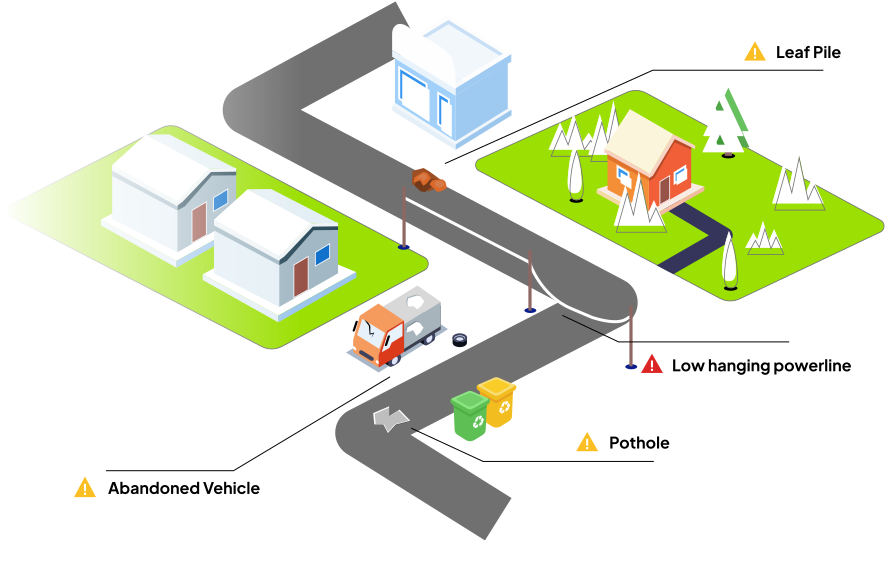
Problem
Road infrastructure deterioration poses significant safety risks to drivers and commuters. Traditional manual inspection methods are costly, time-consuming, and unable to provide consistent city-wide coverage. Councils often discover road defects reactively — after they’ve already caused damage or complaints — rather than proactively identifying and prioritizing repairs.
Solution
As the primary ML engineer, I developed the computer vision pipeline and architected the overall system. The system leverages the regular coverage patterns of waste collection trucks — by mounting cameras on these vehicles, it captures imagery of every road in a council’s service area during routine collection rounds, then processes the data through a deep learning pipeline:
- Object Detection Pipeline: Built with PyTorch, trained to identify and classify multiple types of road defects including potholes, cracking, edge deterioration, and surface deformation
- Cloud Processing: Deployed on Google Cloud Platform with containerized inference services (Docker) for scalable batch processing of daily image captures
- Geospatial Mapping: Each detected defect is geo-tagged and mapped, creating a comprehensive, continuously updated view of road conditions across the entire service area
- Priority Scoring: Defects are ranked by severity and location to help councils allocate maintenance budgets effectively
Impact
- Deployed across multiple Australian local government areas, monitoring council road networks at scale using the existing waste collection fleet — eliminating the need for dedicated survey vehicle passes
- Tuned for high precision to minimize false positives, so councils can trust automated alerts without manual verification overhead
- Cut road condition survey costs by replacing specialized survey vehicle deployments and manual data processing with automated, continuous AI-driven monitoring
- Transformed road maintenance from reactive complaint-driven to proactive data-driven, enabling councils to identify and prioritize emerging defects before they escalate into safety hazards
Technical Highlights
- End-to-end ML pipeline: data ingestion, preprocessing, model inference, post-processing, and result delivery
- Custom-trained object detection models optimized for varied lighting conditions, weather, and road surfaces
- Scalable cloud architecture handling large volumes of daily image data
- Integration with council GIS systems for seamless defect reporting